Think of engine oil as your bike’s lifeblood.
Have you ever walked into a motorcycle service shop and heard terms like 10W-40, 15W-50, Fully Synthetic, or Semi-Synthetic and just nodded as if you understood everything?
Don’t worry—I did the same when I started riding.
The good news is, understanding engine oil is actually much simpler than it sounds. And once you know the basics, you’ll be able to choose the right oil for your bike with confidence.
So, let’s keep it simple.
Why Is Engine Oil So Important?
Imagine going for a long run without drinking water. That’s exactly what your engine feels like without good oil.
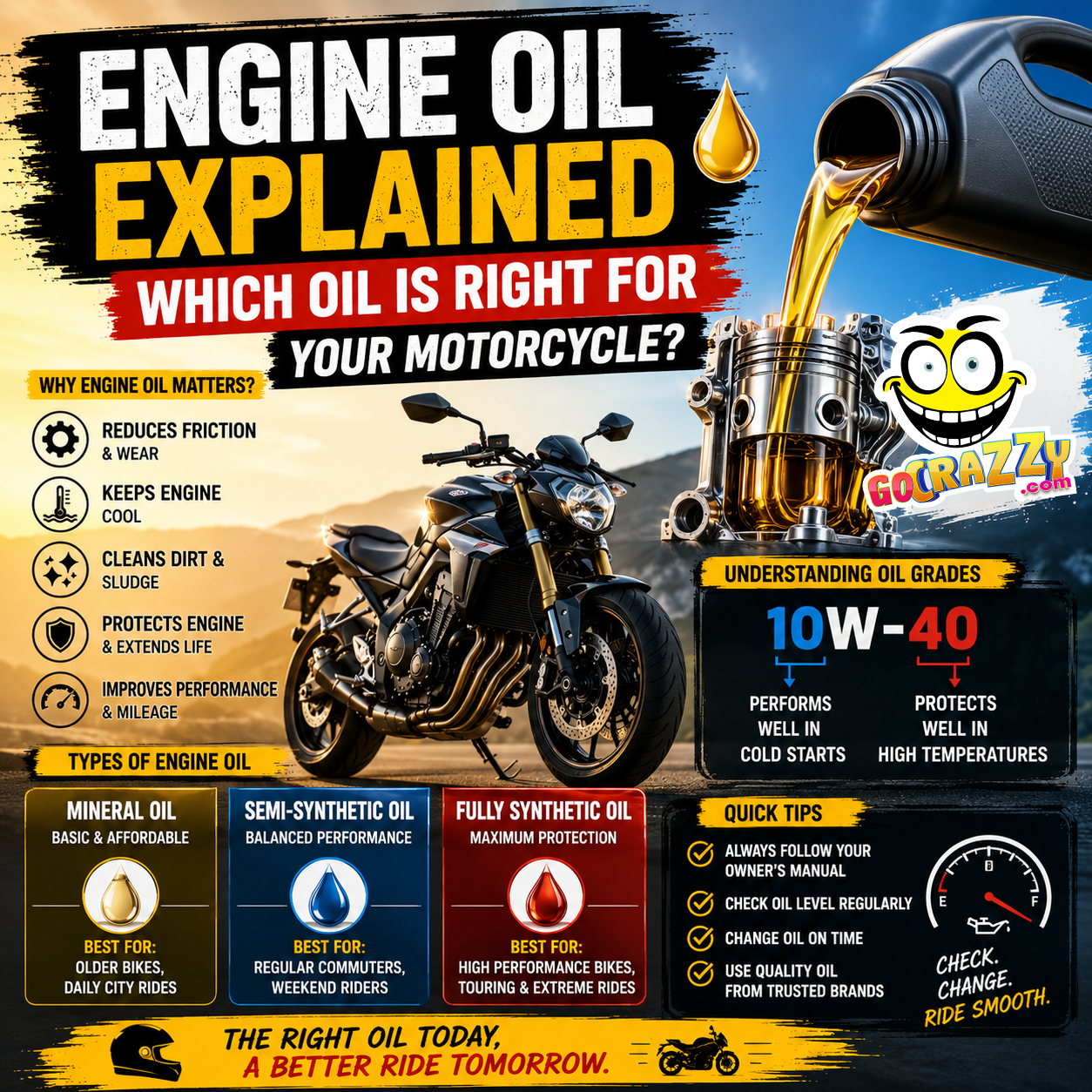
Engine oil helps to lubricate moving engine parts, reduce friction and wear, keep the engine cool, clean dirt and tiny metal particles, and improve engine life and performance.
Simply put, a healthy engine starts with healthy oil.
What Does 10W-40 or 15W-50 Mean?
These numbers often confuse new riders, but they’re easy to understand.
10W or 15W tells you how the oil performs when the engine is cold. 40 or 50 tells you how well it protects the engine when it’s hot.
For many motorcycles in India, 10W-40 and 15W-50 are commonly recommended.
But here’s the important part:
Always follow the grade mentioned in your motorcycle’s owner’s manual. That’s the oil your engine was designed to use.
Mineral vs Semi-Synthetic vs Fully Synthetic
1. Mineral Oil
This is the most basic type of engine oil.
Best for: Older motorcycles, daily city commuting, and riders on a budget.
It’s affordable but usually needs to be changed more frequently.
2. Semi-Synthetic Oil
A great balance between performance and price.
Best for: Regular commuters, weekend riders, and touring enthusiasts.
For most riders, this is a solid all-round choice.
3. Fully Synthetic Oil
This offers a higher level of protection and performance.
Best for: High-performance bikes, adventure touring, long highway rides, and superbikes.
It generally performs well under demanding conditions and can help keep the engine running smoothly.
Yes, it’s more expensive—but many riders feel it’s worth it.
When Should You Change Engine Oil?
There’s no single answer because it depends on your motorcycle, the type of oil you’re using, and your riding conditions.
A good rule of thumb is to follow your owner’s manual and never skip scheduled service intervals.
If you ride frequently in heavy traffic or on dusty roads, your bike may need fresh oil sooner.
Signs Your Engine Oil Needs Changing
Your motorcycle might be asking for fresh oil if you notice:
Rough or noisy engine, harder gear shifts, increased engine heat, dark or dirty oil, reduced performance, or poor fuel efficiency.
If your bike doesn’t feel as smooth as it used to, it’s worth checking the oil.
Common Mistakes Riders Make
Even experienced riders can get these wrong.
Using the wrong oil grade, mixing different types or brands of oil, ignoring the oil level, delaying oil changes to save money, or choosing oil based only on price can all cause problems.
Remember, the cheapest oil isn’t always the best choice—and the most expensive one isn’t always necessary either.
My Personal Advice
If there’s one thing I’d recommend, it’s this:
Don’t experiment with engine oil just because someone on social media says it’s the “best.”
Every motorcycle is different.
The right oil for your friend’s bike might not be the right oil for yours.
Stick to the manufacturer’s recommendation, use quality oil from trusted brands, and change it on time.
Your engine will reward you with smoother rides, better performance, and a much longer life.
Final Thoughts
Your motorcycle works hard every time you twist the throttle.
The least we can do is give it the care it deserves.
Engine oil may seem like a small thing, but it plays one of the biggest roles in keeping your bike healthy and reliable.
Take care of it, and your motorcycle will keep taking you on unforgettable adventures—one kilometre at a time.
Ride Safe. Ride Smooth. Change Your Oil on Time.
Which engine oil do you use for your motorcycle, and how has your experience been? Share your thoughts in the comments—your recommendation might help another rider choose wisely!